The IoT Landscape in 2024: Trends, Smart City Innovations, and Security Challenges
The Internet of Things commonly called IoT has become a transformative force in modern technology, fueling innovation across various industries. By interconnecting devices, sensors, and systems, IoT facilitates real-time data collection, analysis, and automation. In 2024, IoT’s presence and influence on software development have reached new heights. The “things” in IoT now encompass a broad spectrum of devices, from everyday items like smart thermostats and wearable fitness trackers to industrial machinery, autonomous vehicles, smart cities, and medical equipment.
Here are glimpses of key trends, security challenges, and smart city advancements in 2024.
IoT Trends in 2024
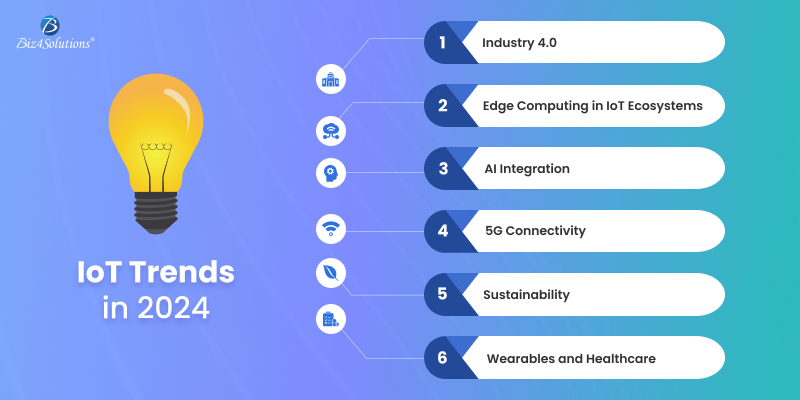
Industry 4.0
IoT is at the core of Industry 4.0, where manufacturing processes are becoming more automated, efficient, and flexible.
Use cases: Connected machines can predict maintenance needs, monitor production lines, and reduce downtime, leading to significant cost savings.
Edge Computing in IoT Ecosystems
Edge computing enables devices to process data closer to where it is generated, reducing latency and enhancing real-time decision-making capabilities.
Use Cases: Faster responses in industries like healthcare, autonomous vehicles, and smart manufacturing.
AI Integration
IoT devices are increasingly leveraging AI and ML for tasks like predictive maintenance, automation, and data analysis.
Use Cases: Smarter IoT systems offering deeper insights and enhanced automation.
5G Connectivity
The widespread rollout of 5G networks continues to support IoT growth by providing high-speed, low-latency communication, enabling the connection of billions of devices.
Use cases: Increased IoT adoption across industries like transportation, healthcare, and smart cities.
Sustainability
There’s an increased focus on using IoT to drive sustainability efforts.
Use Case: IoT devices are being used to monitor energy consumption, reduce waste, and optimize resource use in industries such as agriculture, logistics, and smart cities.
Wearables and Healthcare
IoT-powered devices are transforming patient care by providing real-time health data, enabling early diagnosis, and supporting telemedicine.
Use Cases: Remote monitoring systems, smart wearables, and medical implants.
Smart City Innovations
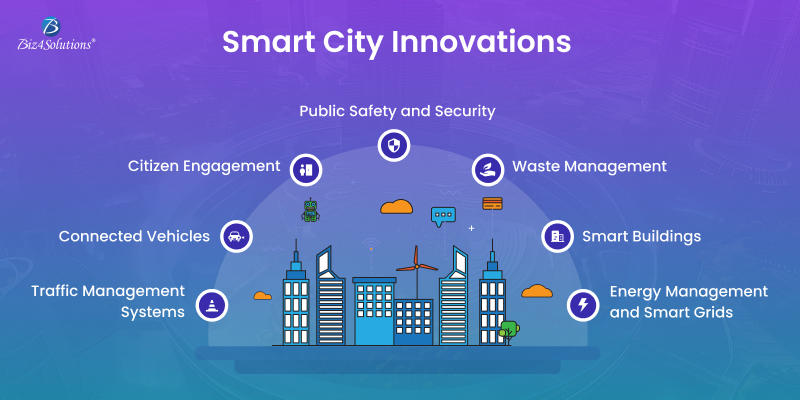
Traffic Management Systems: Smart cities in 2024 are leveraging IoT for intelligent traffic management. Using real-time data from sensors and cameras, cities can reduce congestion, optimize traffic light patterns, and provide dynamic rerouting for drivers.
Connected Vehicles: Vehicles are equipped with IoT technology to communicate with each other (V2V) and with infrastructure (V2I). This enables autonomous driving, improved navigation, and collision prevention.
Energy Management and Smart Grids: Smart grids powered by IoT devices are transforming energy consumption in cities, allowing for better demand forecasting and load balancing. Real-time monitoring enables cities to reduce energy waste and increase the efficiency of power distribution, including the integration of renewable energy sources.
Public Safety and Security: IoT is enhancing public safety through connected cameras, environmental sensors, and smart streetlights. These devices can monitor air quality, detect incidents like fires or accidents, and alert authorities for faster response times. Integration with AI helps analyze data streams to identify risks and improve urban planning.
Waste Management: IoT-enabled waste management systems use sensors in bins to optimize collection routes and reduce fuel consumption. Smart waste systems in cities are also helping to track and manage recycling efforts more efficiently.
Smart Buildings: Connected buildings equipped with IoT devices offer energy-efficient environments with automated lighting, HVAC systems, and enhanced security measures. IoT is also used in predictive maintenance for building management, minimizing equipment downtime and optimizing operational costs.
Citizen Engagement: Cities are focusing on enhancing communication with residents through IoT platforms. Citizens can interact with city services, report issues, and access information via connected apps and devices, improving the overall quality of urban living.
Security Challenges in IoT
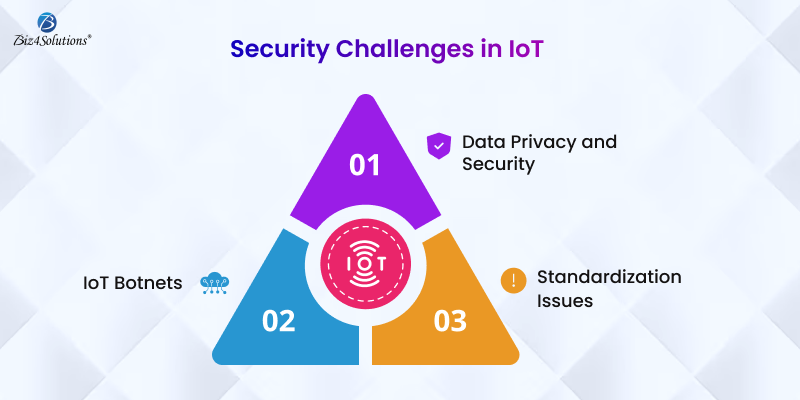
Data Privacy and Security: One of the biggest challenges in the IoT ecosystem remains security. The sheer number of connected devices creates numerous points of vulnerability. Unauthorized access, data breaches, and attacks like Distributed Denial of Service (DDoS) are common threats. Inadequate security protocols in low-powered IoT devices and legacy systems amplify the risk.
IoT Botnets: Cybercriminals are increasingly targeting IoT devices to build botnets for launching large-scale attacks. With weak security protocols, many devices can be compromised easily, posing risks to larger networks.
Standardization Issues: The lack of a unified security framework for IoT devices across industries leads to inconsistent security practices. This leaves gaps in how data is encrypted, authenticated, and managed.
How do we address these Security Vulnerabilities?
Zero-Trust Architecture: Organizations are adopting a zero-trust approach, requiring verification at every stage of data access, limiting device permissions, and implementing multi-factor authentication (MFA).
IoT Legislation: Governments are beginning to impose stricter regulations to enforce security standards, including mandating device manufacturers to integrate better encryption and authentication protocols.
In a Nutshell
The IoT landscape in 2024 is dynamic, with innovations driving transformative changes across industries, especially in smart cities. While the integration of AI, 5G, and edge computing has opened up exciting possibilities, it also brings forth significant security challenges. The IoT landscape will continue to evolve beyond 2024. Therefore, ensuring robust security measures during IoT app development and advancing regulatory frameworks will be essential to safeguard devices and data in this interconnected world.